


With AI text-to-video technology transforming written words into production-grade videos, the film industry finds itself at the dawn of a new era. Creators are no longer bound by budget, manpower, or even the laws of physics. The only limit is the breadth of one’s imagination.
However, there is a growing wave of one-click AI video generators that do not capture the complex vision of these creators. To meet the needs of filmmakers who want cinematic flexibility and narrative control rather than simple prompt-based output, award-winning filmmaker Zoey Zhang and her husband Ray Wang, a former Instagram engineering leader, have created Flick.
Their platform is built around a simple belief: AI should enhance filmmaking, not replace it. Instead of another one-click video generator, Flick gives filmmakers cinematic control through creative workflows designed for storytelling, iteration, and artistic direction.
“At Flick, creators don’t lose their authentic voice as AI scales,” Zhang said. “We’re building a bridge so filmmakers won’t think about ‘prompting models’ at all — they’ll just direct, compose, and feel, and the tools will disappear into their creative flow.”
Zoey Zhang comes from a traditional filmmaking background and began experimenting with AI filmmaking in 2022. In early 2025, she gained attention after participating in the Massachusetts Institute of Technology’s AI Film Hack, where she created an AI-generated short film that won a best visual award. Her husband and business partner Ray previously worked as a founding engineer behind Instagram Stories, scaling the product to hundreds of millions of daily users.
The duo has now announced that they have raised $6 million in seed funding. The round included backing from True Ventures, GV, Y Combinator, Lightspeed, Formosa Capital, Pioneer Fund, Olive Tree Capital, N1, and angel investors.
“Ray and Zoey represent the perfect combination of world-class technical execution and deep creative understanding. They’re not just building AI tools – they’re empowering a new generation of filmmakers to focus on what matters most: storytelling and artistic expression. Their craft-first approach and genuine commitment to the creative community makes them the ideal team to define this emerging category of AI-native filmmaking,” said Mike Montano, a Partner at True Ventures.
Check out the 10-slide pitch deck Flick used to secure the $6 million Seed funding round.
What were the slides in the Flick pitch deck?
Browse the exact example slides from the pitch deck that Flick used to raise $6M from True Ventures.
1. Idea Validation Slide
It’s very easy for first time founders to fall into the trap of building in isolation. They’ll often work on their idea for months, convinced that the audience will magically appear simply because the idea is exciting. This “if you build it, they will come” mindset can fool new founders. Experienced founders understand that idea validation makes all the difference between building something that people love and launching something that no one notices.
Zoey and Ray understand that there’s no better validation for filmmaking than winning awards. Their idea validation slide is right at the start of the pitch deck, showcasing their real-world AI filmmaking practice. The slide’s design is simple but effective, with a big headline and posters of award-winning films created by Flick. While the film posters add visual appeal, the slide could be greatly improved by enlarging the awards and including the names or logos of recognizable festivals and awards.

2. Demo Slide
Ask any pitch deck expert about live demos and they’ll give you the same advice: “Never do live demos, it’ll ruin your pitch.” This has become one of the golden rules of pitching, and the argument is simple: something can and will go wrong during the demo — bad internet, a broken server, defective component, or any number of possible screwups you can’t begin to predict. Just ask Elon Musk. In 2019, a demonstration intended to show the strength of the ‘armor glass’ windows on Tesla’s Cyber Truck went horribly wrong when Elon Musk’s team threw a metal ball at them.

Beyond the risk of equipment or technical failures, there’s another reason for not including a live demo in the pitch deck. When founders are showing a live product to investors, they are simply displaying how the product works. If it is a physical, everyday product, investors may be interested in seeing a demo, but investors rarely care to see demos of technical products. They are more interested in understanding how the product solves a particular problem and, more importantly, if there’s demand for it. If you can show strong customer growth, investors are going to assume the product — whatever it is — works well enough for its customers, and that’s what they need to know in order to make an investment decision.
This same logic applies to the Flick demo. While it isn’t a live demo and avoids most of the risks that come with one, showing videos made with Flick won’t provide investors with new or useful information. Investors probably won’t understand the technicals of filmmaking, so they should’ve skipped the demo slide and focused on more important things such as traction, consumer growth, or other KPIs.

3. Market Positioning Slide
Many founders like to compare their startup to an existing established company to simplify the concept. Sometimes, it can be useful to quickly convey what your startup does. However, most times, the comparison isn’t accurate and it’s often overused. We’ve seen “We’re the Uber of X” everywhere but has anyone ever seen someone go ‘wow’ with this statement? This positioning is so ubiquitous that founders simply waste time trying to fit themselves into a comparison that sells their real value and uniqueness short.
Flick positions itself alongside other category-defining companies. This can help investors understand Flick’s long-term vision and how it sees itself in the future. Beyond that, there’s not much value for investors. Shrewd investors will see this as marketing fluff and look right past it.
On the design side, the slide is exceptionally clean. The visual hierarchy is well-defined with a punchy headline and logos that makes it easier for viewers to quickly understand the compression with different industry leaders. Additionally, lots of white space makes the slide uncluttered. Overall, while the slide is visually appealing, founders have to be really careful with this kind of messaging. Without any facts and figures and substance behind the statement, these comparisons can work against them.

How to create your own pitch deck like Flick:
We hope you learned something from the Flick pitch deck, and that you are able to use these insights for your own business. If you’d like to, you can bookmark it at bestpitchdeck.com/Flick.
Although it probably goes without saying that having a successful business (outside just their pitch deck) was integral to their success, the perfect pitch deck is critical for any startup to ensure your vision is portrayed properly. That’s where crafting the perfect pitch deck comes essential:
You might find our other resources on how-to create a pitch deck helpful, or benefit from using one of our expert-designed templates:
Our team has helped create decks that have closed over $2B+ in deals & funding for leading startups and even VC firms. You can leverage this experience and get a jumpstart on your pitch with one of our easy-to-use presentation templates, one-pagers, or financial models.
Creating a deck? Check out our pitch deck templates.
Every pitch requires a unique approach tailored to its audience. Our team of experts has created pitch decks for different industries, as well as funding stages:

You might be interested in the popular TV & Film Pitch Deck Template designed by our team of experts at VIP.graphics. This investor presentation template is built specifically for film & TV screenplays.
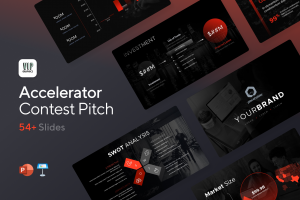
Accelerator Pitch Deck Template — The Accelerator Pitch Deck template was crafted for early-stage founders seeking to win funding &/or investment from pitch contests, accelerators, incubators, and angels or VC firms. Winning a pitch contest or being accepted to a prominent accelerator program requires a unique strategic approach to an investor pitch presentation.
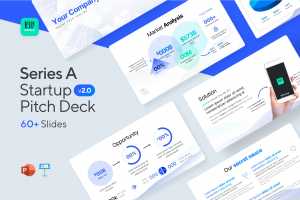
Series A Pitch Deck Template — A pitch deck template for startups and founders raising funding: Smart, actionable slides that work. This is a pitch deck template built specifically for startups, entrepreneurs and founders raising their first seed or Series A round of institutional capital.
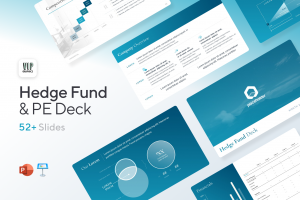
Mergers & Acquisitions Pitch Deck Template — Perfect Pitch Deck™ is a template crafted for later-stage businesses entering more sophisticated discussions such as mergers & acquisitions (M&A), late-stage investment (Series C+), or other partnerships & financing opportunities. Our team of experts created this presentation to empower founders to present with confidence to investment banks, private equity (PE) groups, and/or hedge funds (and vice versa).
Alternatively, feel free to browse our growing selection of pitch decks tailored for specific industries and businesses.