Pitch Deck Guide › Investment Ask Slide

Investment / Ask Slide

Learn how to build a winning investment slide for your pitch deck with this step-by-step guide.

Updated: Apr 2026

At the end of the day, the primary purpose of every investor pitch deck is to raise funding. The ask slide typically appears at the end of a pitch deck, and in simply states how much funding you are asking for and what you plan to do with that money.

Prospective investors should be able to understand how this round of funding will translate to progress on both the product and sales front (and why now is the right time). It’s important for founders to not just describe use of funds or hiring plans, but rather tie the ask to specific growth targets. An effective investment ask slide should state a specific funding amount your raising, the runway it will provide your company, the milestones you’ll hit in that time, and how/when you’ll raise your next round. If you’ve already secured commitments (or self-funded) part of the round, it’s a great idea to mention it on this slide, along with any past backers or notable investors.

There’s no need to overcomplicate your ask slide: for example, the renowned startup accelerator Y-Combinator suggests just one sentence stating the ask and what you’ll achieve with (and by what time).

Ready-made Pitch Deck for Startups - Brutalist PowerPoint Design Template

Use our proven pitch deck template, crafted by the pros.

Instructions

How to create an investment slide for your pitch deck

Follow along with this brief guide for what you should include in your pitch deck’s investment slide:
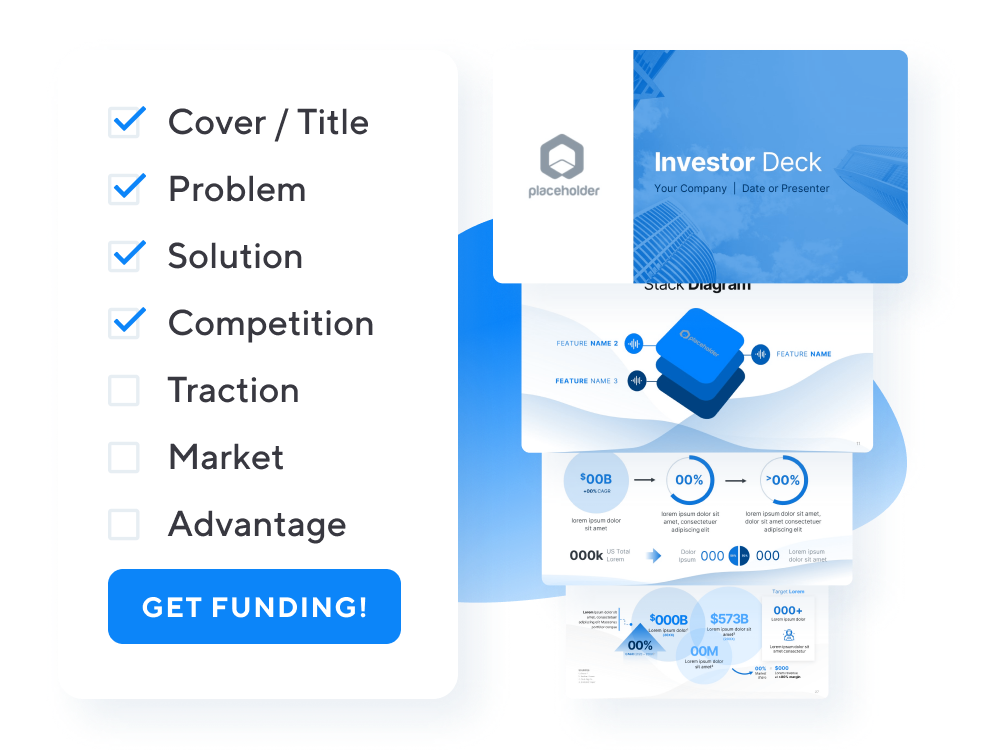

Pitch Deck Guide: Contents of Great Slides

1. Content of the investment slide

  • The amount of funding you are raising (+ how much has been committed already)
  • Milestones you’ll achieve with this funding
  • Runway and path to next round of funding
  • Use of funds
  • Past investors
  • Relevant investment terms (ie. valuation, vehicle, discount, interest)
Pitch Deck Guide: Key Questions to Address for Great Slides

2. Questions the investment slide should address

  • How much funding are you raising?
  • Where will this funding get you? (ie. revenue milestones, months of runway, next anticipated round)
  • How will the funds be used?
  • Why are you seeking this investment (ie. scaling growth, new product development)? What will this help achieve?
  • How much has already been raised or committed? Is the round oversubscribed / when will it close?
Pitch Deck Guide: Common Mistakes to Avoid

3. Common investment slide mistakes

  • Lacking concrete milestones across the business (product, marketing, and hiring)
  • Failing to budget enough runway breathing room to complete the next fundraise
  • Technical founders can tend to focus solely on product goals, investors also want to see your marketing and hiring plans
  • Broad use of funds (specific product & growth goals are better than accounting categories like R&D, G&A, etc.)
  • Diving too deep into operational and hiring plans that don’t matter to investors
  • Presenting too wide of a range in your ask (investors will assume you don’t have a concrete plan)
Pitch Deck Guide: Design Tips for Great Slides

4. Design tips for investment slides

  • Highlight milestones (don’t just show use of funds)
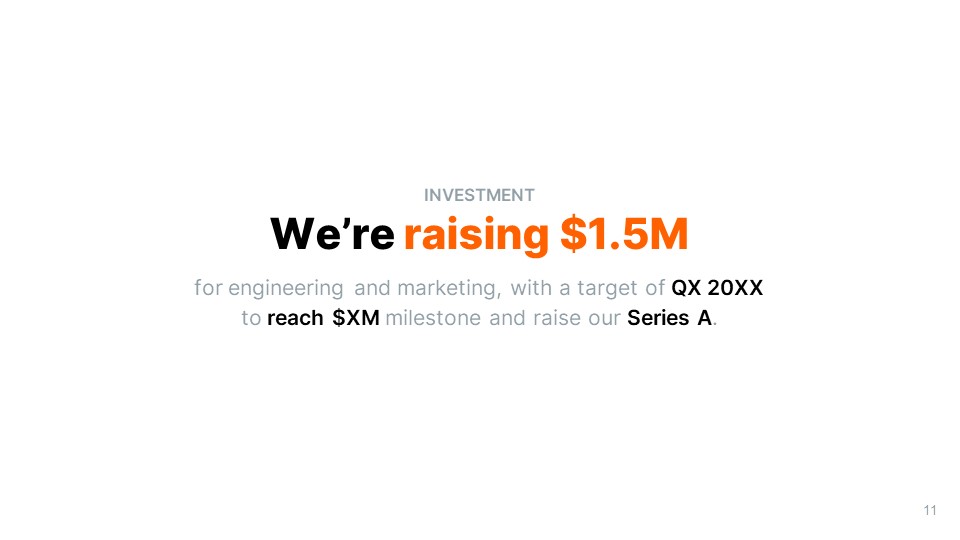
  • Present a clear number (“We’re raising $XM…”) in the headline; don’t bury the ask
  • Describe your path to profitability &/or the next round (“…to breakeven and raise Series A in 18 months”)
  • Create FOMO: an oversubscribed ask (“$1M seed, $1.2M soft commits”) is better than a broad range (“We’re raising $1-2M”)
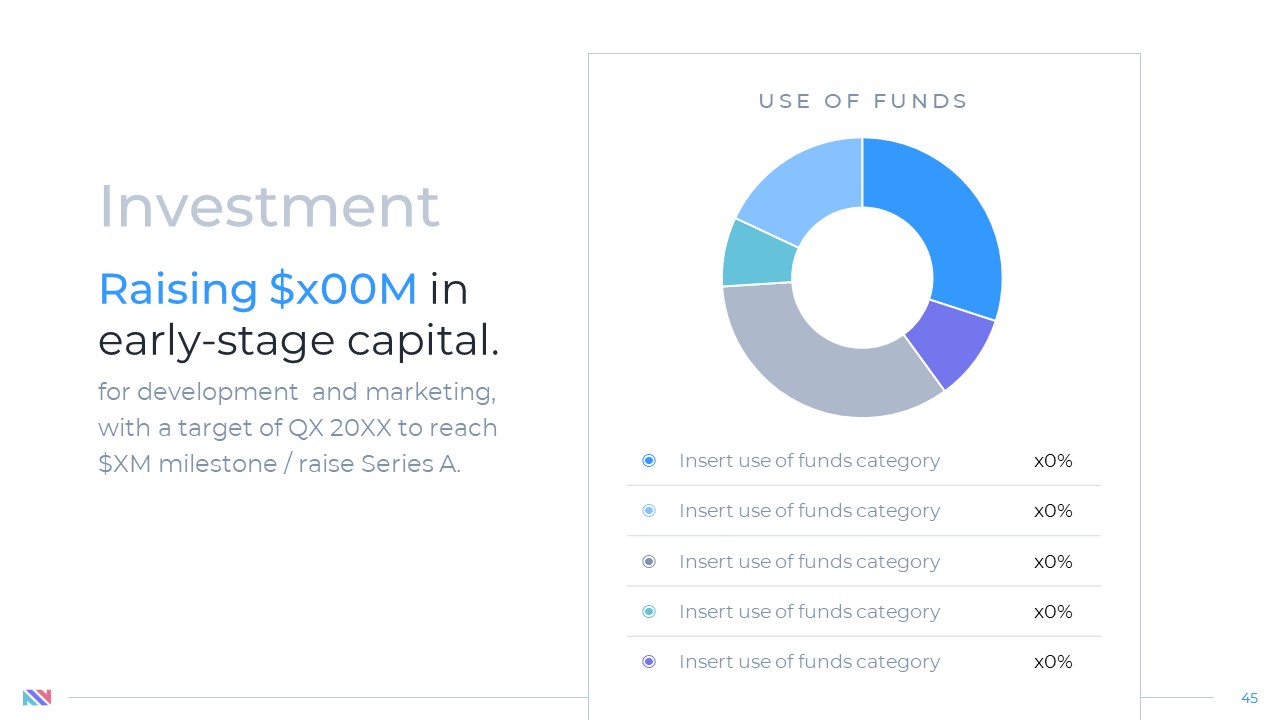
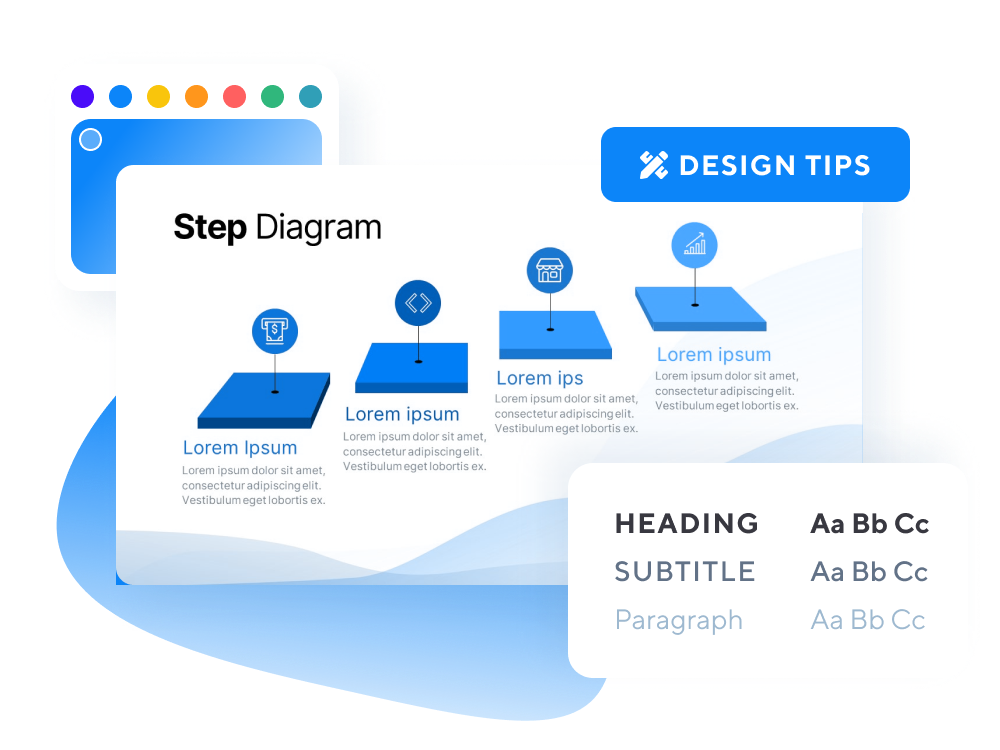
  • Communicate with visuals where possible (ie. timelines for roadmaps, pie charts for use of funds)
  • Choose clear, readable fonts and colors
  • Keep it concise & to-the-point (see Guy Kawasaki‘s 10/20/30 rule)
Inspiration from the experts

Example pitch deck investment slides from Airbnb, Uber, Crowdbotics & more

The best investment slides make a clear case for how the funding sought will help the startup achieve key milestones, with a clear timeline for goals and growth. Depicting the path to profitability or the next round is often plenty sufficient in lieu of a complicated use of funds breakdown.

Below are some examples of winning investment slides from pitch decks for household names like Airbnb, Uber, and Sequoia Capital:

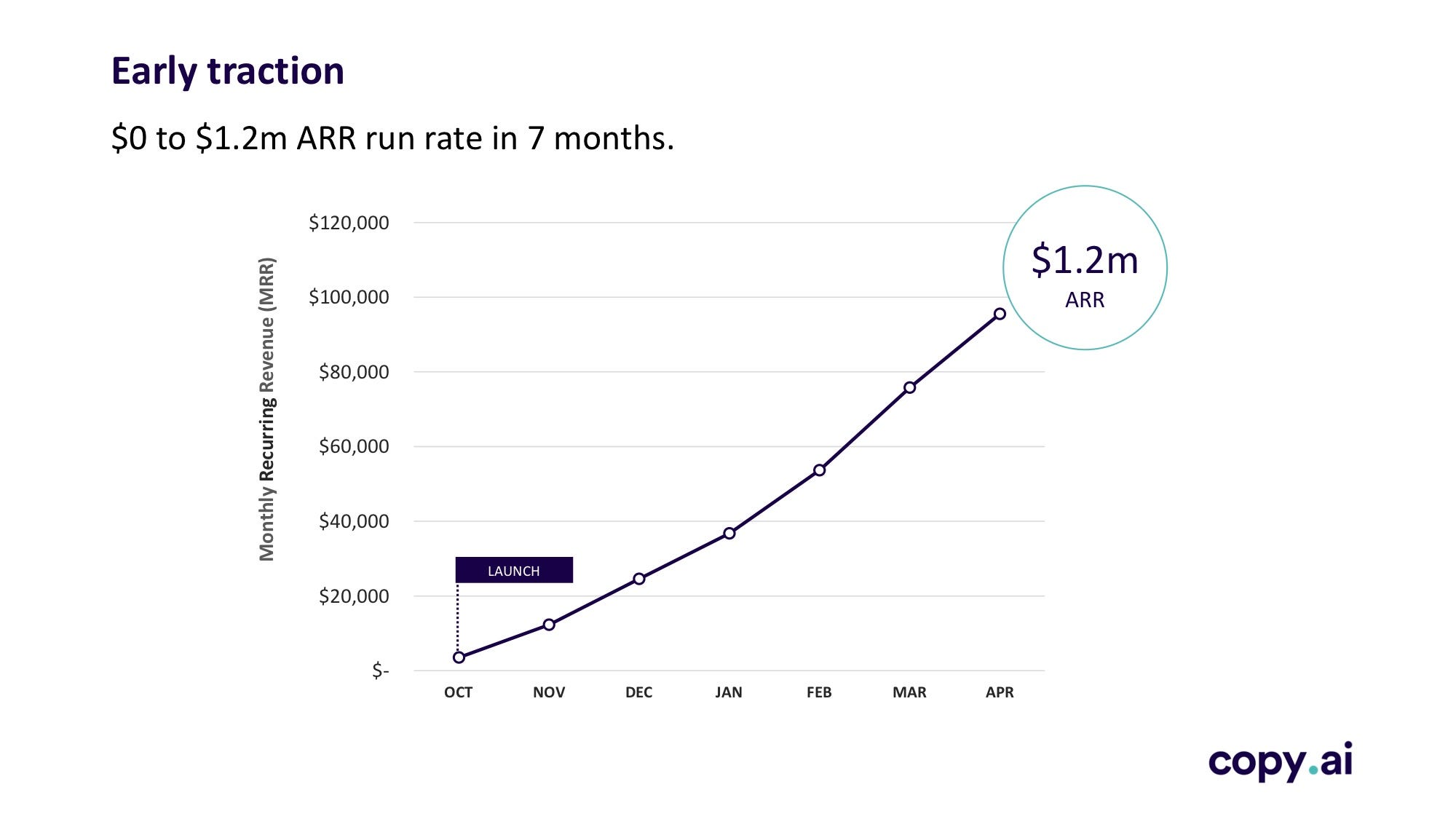
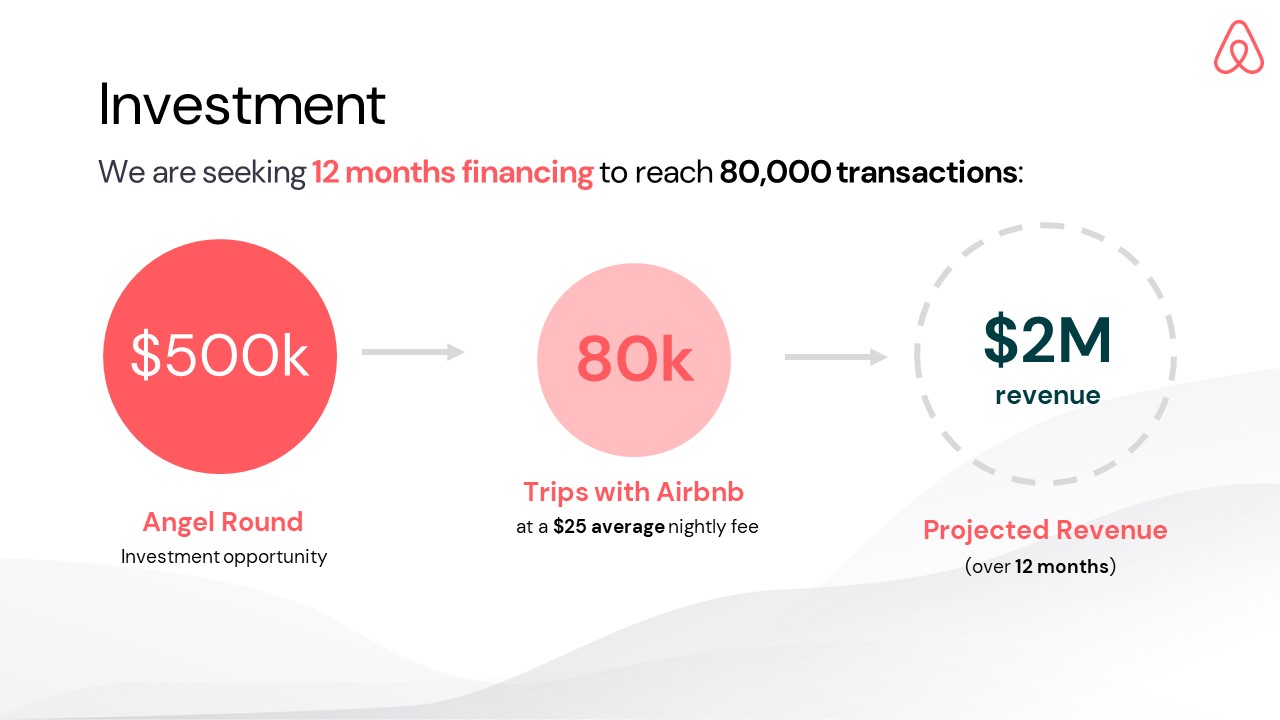
Airbnb Investment Slide: This slide from the iconic Airbnb seed pitch deck that raised $600k in 2008 exemplifies how you can keep the ask slide simple by just talking about your target with this funding ($2m revenue for Airbnb).

Carta Investment Slide: Carta used this Series A pitch deck to raise $7M in funding. Their ask slide showed investors exactly how they planned to use their funding by listing simple, measurable goals.

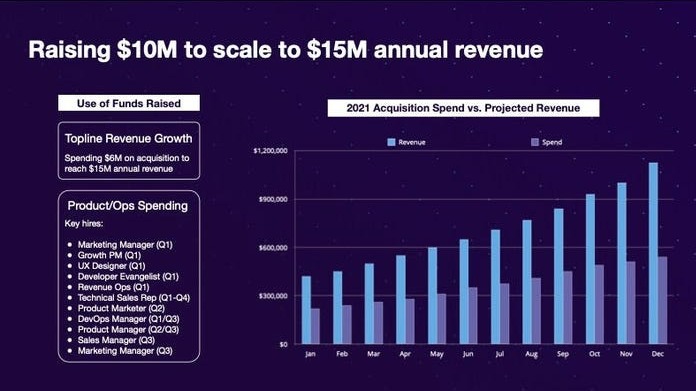
Crowdbotics Investment Slide: Crowdbotics’ ask slide includes a detailed hiring plan and revenue target that explains what the investment will be used for. For added measure, they included a spend vs. revenue chart depicting profitable projected growth.

Canix Investment Slide: This slide from the Canix seed pitch deck that raised $2.5M in 2020 includes three key pieces of information: how much they’re raising, how they’ll use it, and a timeline for their next raise.

AI Rudder Investment Slide: AI Rudder’s ask slide from their Series B pitch deck highlights notable backers under each previous stage of funding.

Card Blanch Investment Slide: The ask slide in Card Blanch’s seed pitch deck could be improved with more measurable milestones (ie. the specifics and goals of the”GTM strategy” and “aggressive marketing campaign”), but nevertheless does a good job of covering all the bases across product, IP, and growth.

Ready to build your pitch deck?

Build your investor presentation with the pitch deck template created by the experts behind Fortune 100 companies & Y-Combinator alums – trusted by hundreds of founders.
Download Now