Pitch Deck Guide › Market Slide
Market Slide
Learn how to build a winning market slide for your pitch deck with this step-by-step guide.
Learn how to build a winning market slide for your pitch deck with this step-by-step guide.
Investors take huge risks when they invest in a new startup. Assessing how much money they can make from risking that initial investment is their #1 priority. A company’s market slide tries to answer this question by presenting numbers such as the Total Available Market (TAM) and Serviceable Addressable Market (SAM).
Venture capital funds & angel investors operate under power laws and generally seek to invest in scalable startups that target billion-dollar market opportunities (aka. “unicorns”). The success of their investment strategy is determined by one (or a few) of the many startups in their portfolio actually realizing this 9-figure success, so your market slide should make a compelling case for why your startup could be that one big win.
To answer these questions and present verifiable statistics, creating the market slide of your pitch deck will require extensive research and analysis. It’s worth noting that some industry research you find may not be sufficiently specific to your target market, nor is it a guarantee of customer demand in your segment.
But there’s more to market analysis than just opportunity size: investors also want to know how the market will change (ie. due to external factors such as regulations or technological progress). Highlighting key trends and recent shifts in the market will help address why now is the time to invest in your startup.
The market slide should also demonstrate an intimate understanding of customers’ needs and pain points — if not, the company may not be addressing a real problem in the desired way, which is a sign of weakness in the eyes of an investor. Understanding the different types of customers (ie. use cases) and their needs & goals can be the difference between a successful startup or the one that eventually fades out.
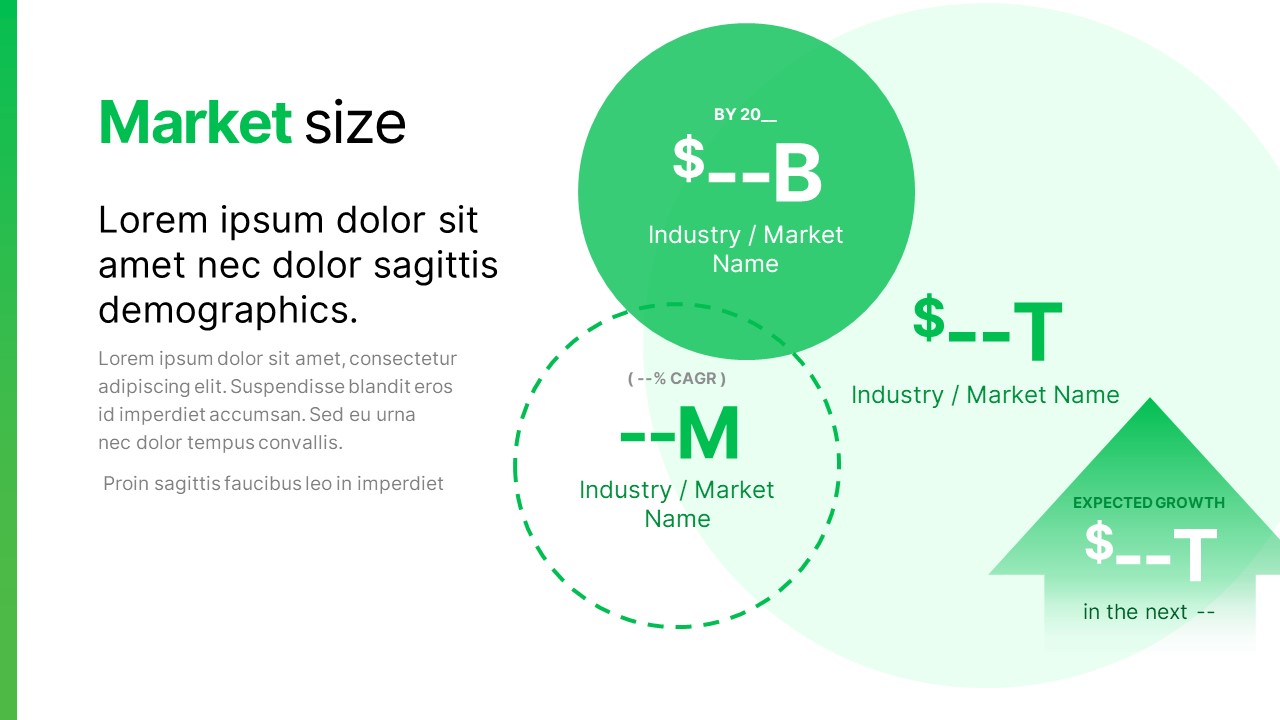



Follow along with this brief guide to learn what you should include in your pitch deck’s market slide:
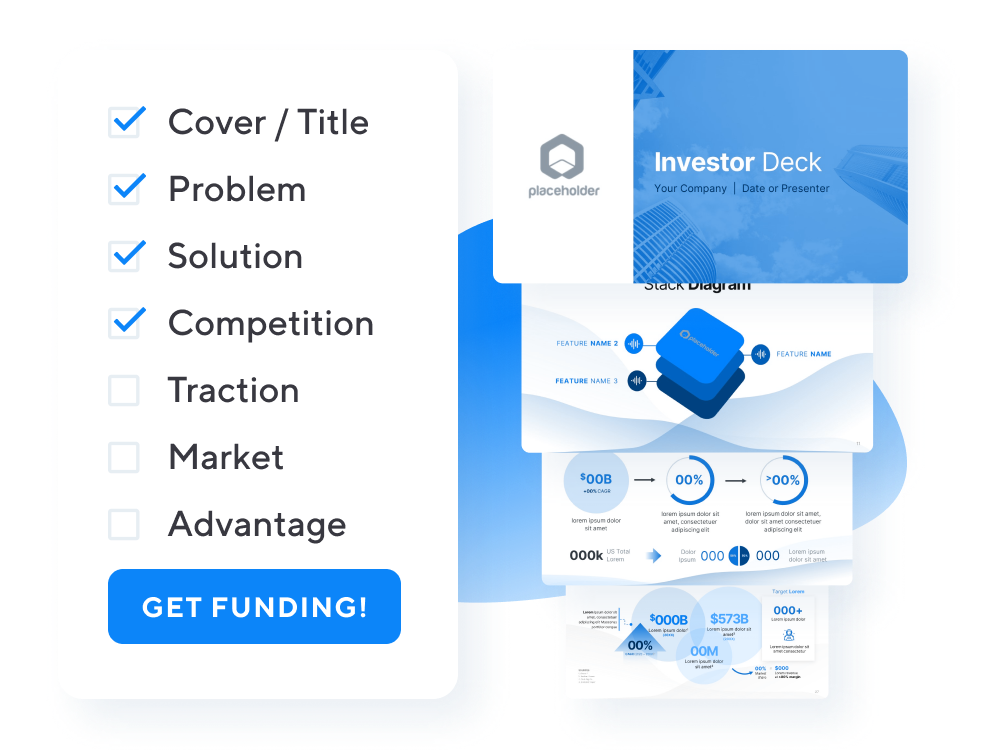

An effective market slide should address the size of the opportunity (market size), why now is the perfect time for your company to blossom (market trends), and who makes up the market (target market). This may seem like a lot to address, but it boils down to highlighting a handful of key statistics and trends in a visually-appealing layout.
The key is to drive urgency by presenting the market as a massive opportunity that is currently underpriced but poised to explode. Using statistics and charts is a great way to frame the market slide in easy-to-grasp terms.
Below are some examples of winning market slides from pitch decks for household names like Airbnb, Uber, and Sequoia Capital:

Eleven Labs Market Slide: Eleven Labs raised $2M for their AI-powered speech software using this deck. Their market slide is simple, with three big numbers for the professional content creation, dubbing, and translation/interpretation industry sizes. The company achieved unicorn status just a year later.

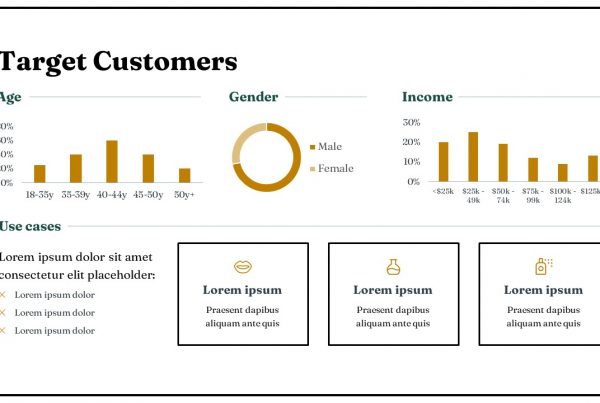
Gable Market Slide: Gable used this deck to raise $16M for their Series A round. Their market slide hones in on their exact target consumers, with market size details on the left and a list of key demographics on the right. This slide could be improved by including clear big numbers for TAM / SAM / SOM.

INCYMO AI Market Slide: INCYMO AI raised $850K in seed funding for their AI marketing automation tool with their Seed deck. Their market slide does a great job highlighting their TAM and SOM through two simple calculation graphics.

Chamberlain Coffee Market Slide: Chamberlain Coffee’s 2024 pitch deck secured $4.6M in Series A funding. Their market slide shows their focus on Gen Z consumers through the central graphics. They also did a great job highlighting how Chamberlain Coffee aligns with current trends in Gen Z’s coffee preferences.

Axle Health Market Slide: Axle Health raised $10M in Series A funding in 2025 for their AI-powered healthcare tech. Their deck includes a simple but effective market slide, using both a graph of projected CAGR and a list of statistical trends in target market growth and preferences.

Thrive Global Market Slide: Thrive Global’s market slide uses three columns to show the gap they fill: a relevant quote from a health insurance leader, 3 major market statistics, and 1 consumer demographic statistic. The company ultimately raised $80M in Series C funding.

ANYbotics Market Slide: ANYbotics $50M Series B deck’s market slide includes a graph highlighting mobile robotics as the fastest growing market segment, TAM estimate, and site counts by sector. The slide could be improved by including big numbers for TAM / SAM / SOM.

Secureframe Market Slide: Secureframe raised $56M in Series B funding in 2022. Their market slide is simple but effective, with a large TAM figure, supporting bullets about market expansion trends, and a bar chart of the security compliance market’s rapid growth.

Paytm Market Slide: Paytm conducted India’s largest IPO in 2021. Their market slide uses 5 different growth charts depicting the vast underlying Indian digital finance-service market opportunity, across e-commerce, lending, wealth management, and insurance.
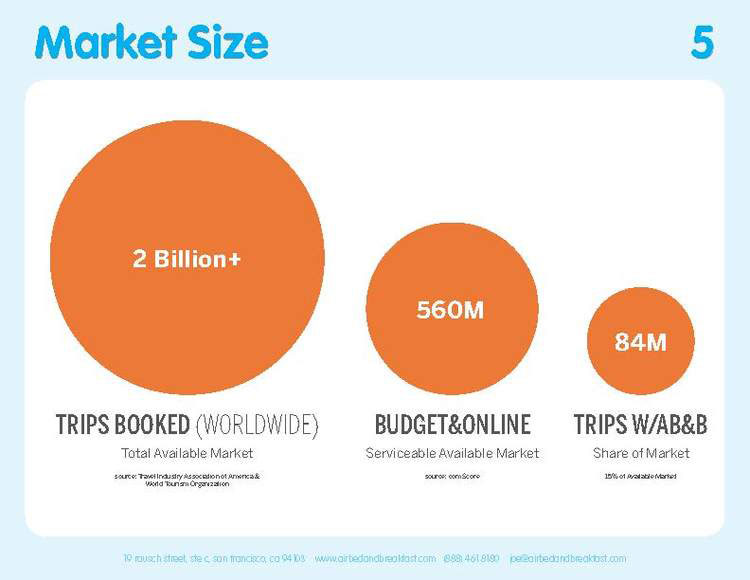
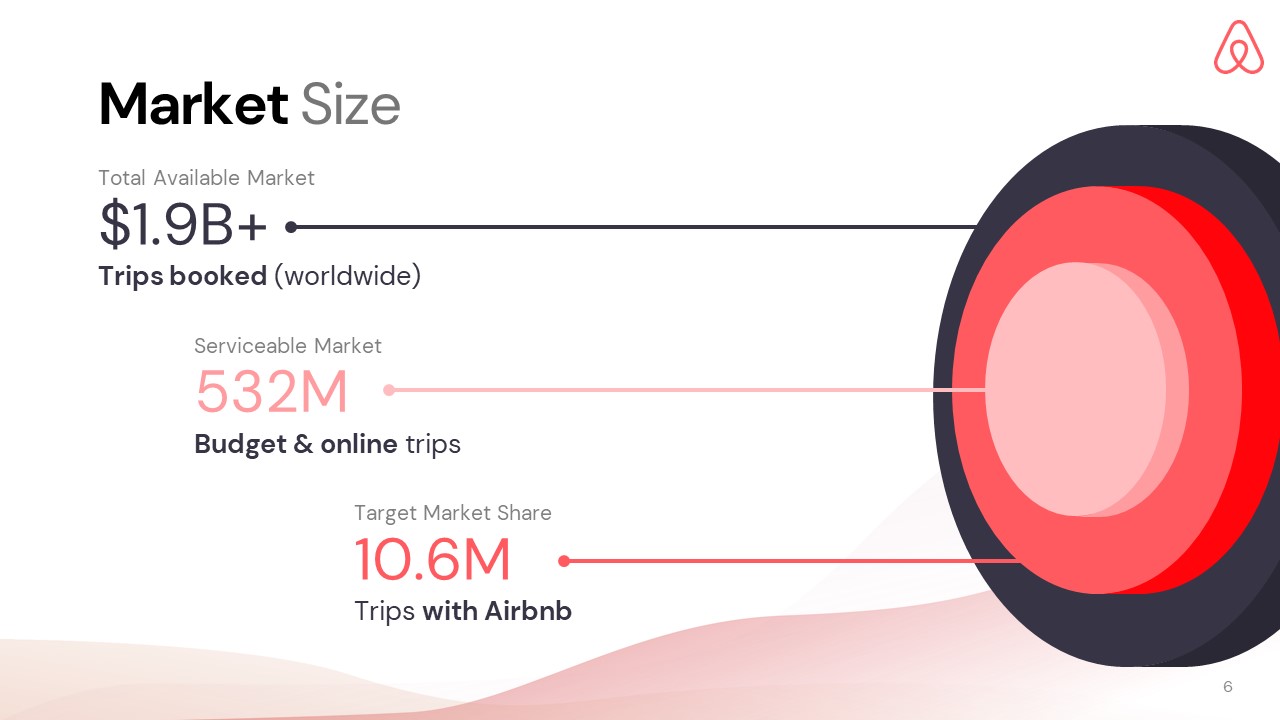
AirBnB Market Slide: Airbnb raised $600K pre-seed in 2008 with one of the most famous pitch decks of all time. Their market slide is incredibly visually simple but effective, portraying their TAM / SAM / SOM as big numbers in three tightening circles.

Crowdbotics Market Slide: Crowdbotics raised $22M in Series A funding with this 2022 pitch deck. Their market slide is well-organized, highlighting market size, growth opportunities, and future and current use cases in visually appealing text boxes.

Chartmetric Market Slide: Chartmetric raised $2M in Seed funding in 2021 using this deck. Their market slide opens with a big global revenue number, followed by 3 simple statistics about market growth, streaming segment growth, and potential customer pool.

Ladder Market Slide: Ladder raised $100M in Series D funding for their digital life insurance platform in 2021. Their pitch deck reads like a presenter deck, with a simple market slide featuring a bubble diagram with no numbers that positions life insurance as the “crown jewel” of Insurtech.

Starburst Market Slide: Starburst’s market slide is focused on the “massive TAM,” featuring a bubble chart of relative market sizes that shows how each demand segment overlaps. They raised $250M in Series D funding with this deck, nearly tripling their valuation to $3.35B.

Persefoni Market Slide: In 2021, Persefoni raised $101M in Series B funding for their carbon footprint monitoring startup. Their 4-slide deck includes a creative market landscape slide with a flowchart diagram that splits ESG reporting down by pillar to pinpoint where their platform fits within the market landscape.
Build your investor presentation with the pitch deck template created by the experts who have helped raise billions for top startups and Fortune 100 companies – trusted by hundreds of founders.