Competition Slide
Learn how to build a winning competition slide for your pitch deck with this step-by-step guide.
Learn how to build a winning competition slide for your pitch deck with this step-by-step guide.
There is a 99.9% chance that any winning startup should have some competition. If there’s a market for your product / service, someone must be already serving that segment. Even if your startup is pioneering an entirely novel category, your customers are likely already using some inferior alternative or combination of solutions to currently solve these pain points. The competition slide will usually demonstrate how existing systems fall short, or why the status quo is inefficient or outdated.
Instead of thinking of competitors as a hurdle, founders should perceive them as an opportunity. Hotels and resorts were a billion-dollar industry when Airbnb launched its services in 2008, yet they disrupted the whole category. Uber did the same for taxi cabs and ridesharing.
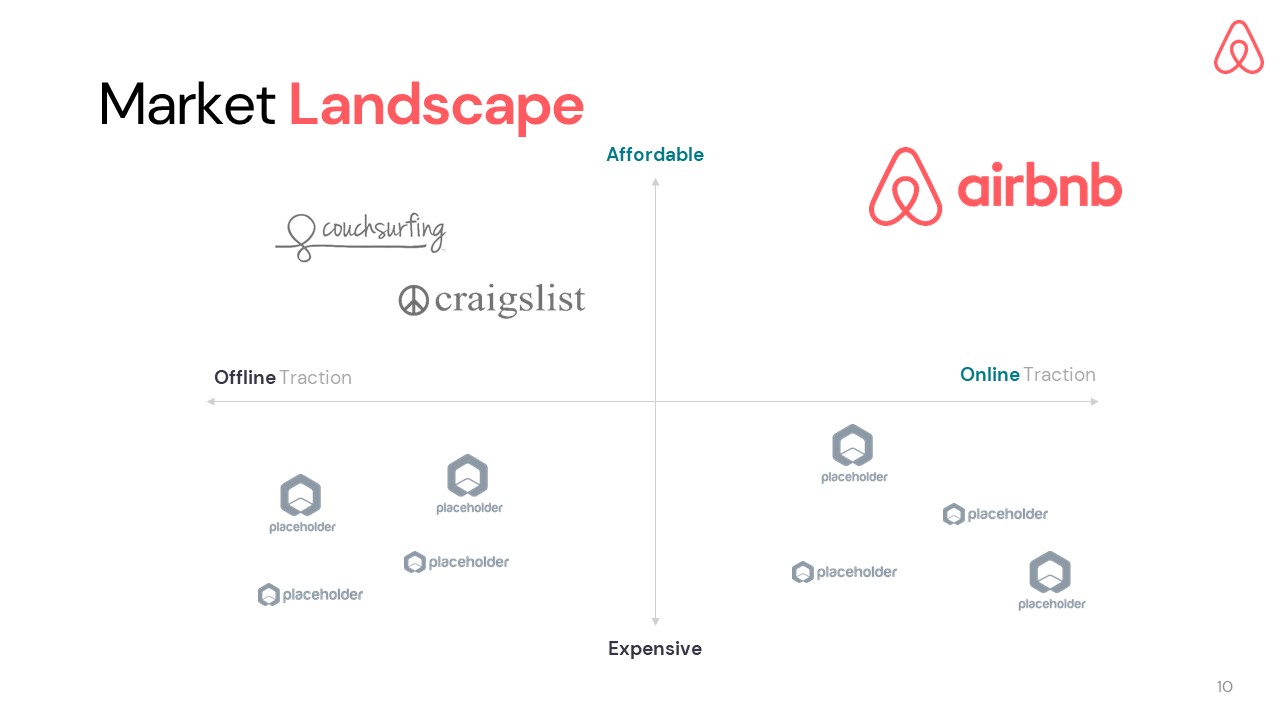
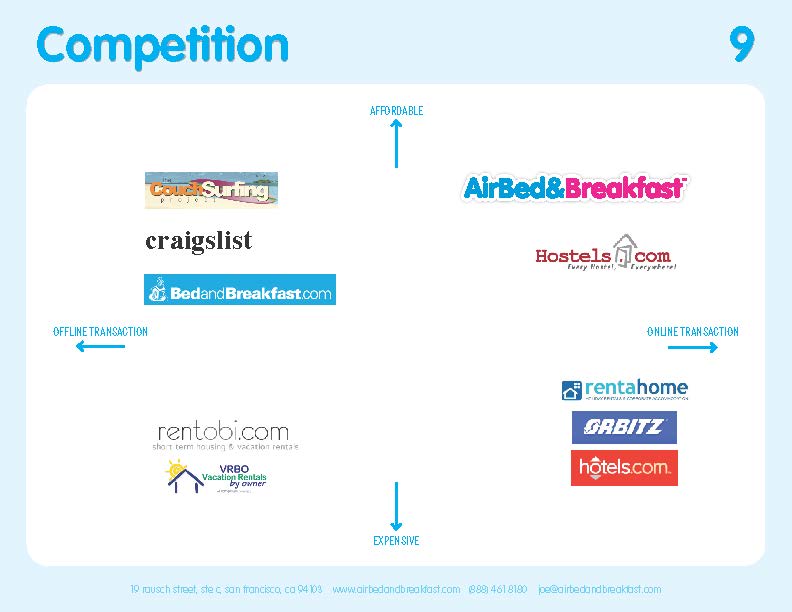
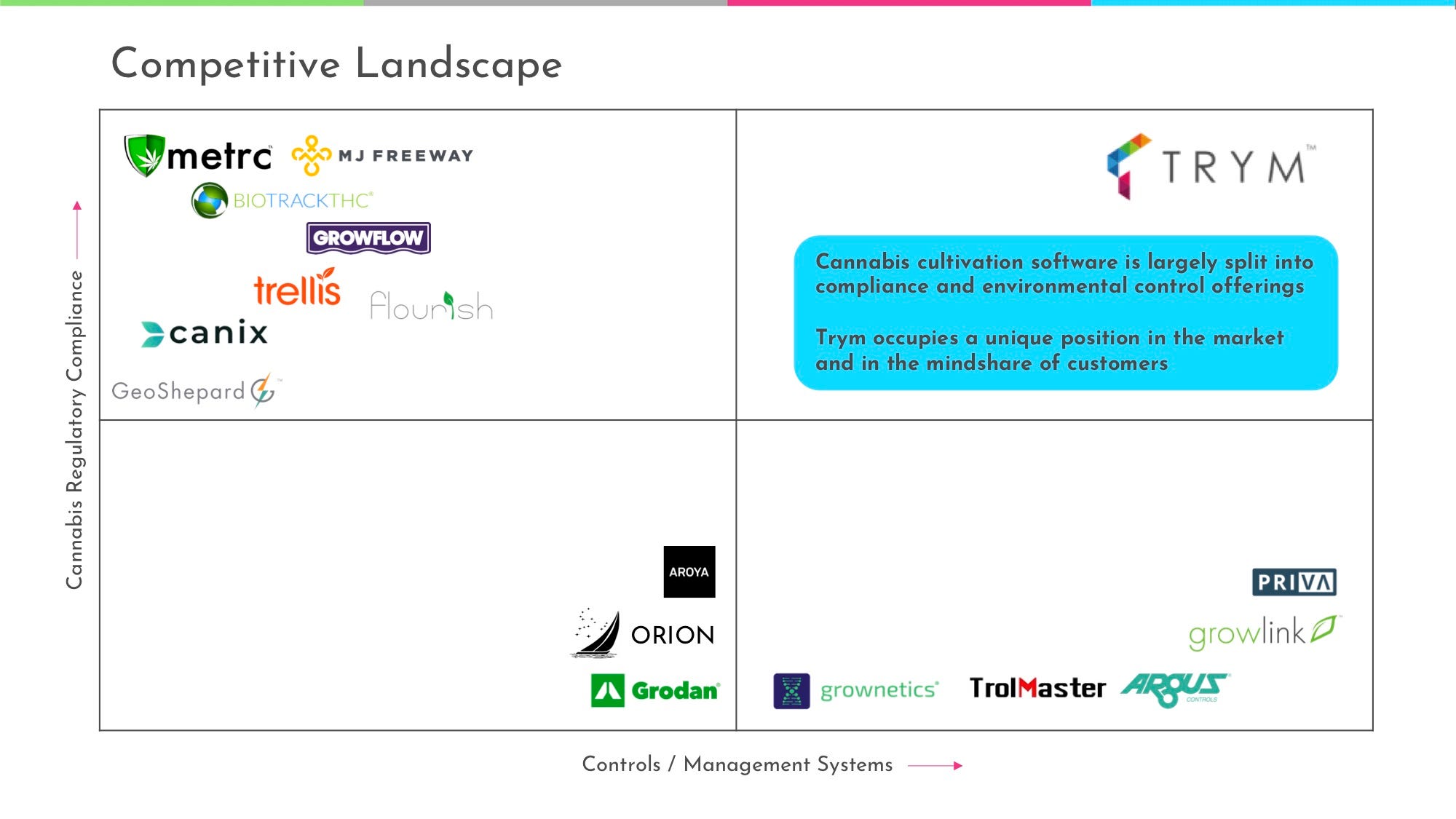
A good example of a competition slide is Airbnb‘s “magic quadrant” diagram, shown below: the axes are labelled based on the two most valuable propositions for the business’s end-users, with logos of several competing companies plotted within the quadrants.
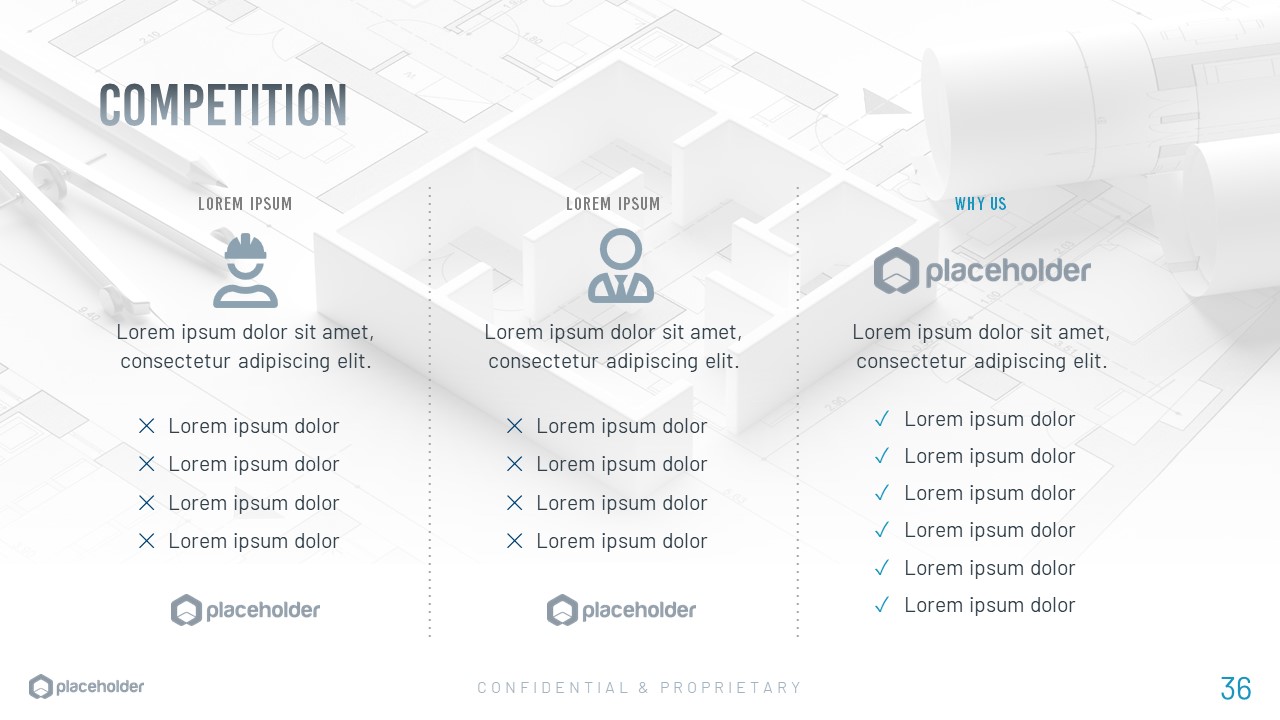
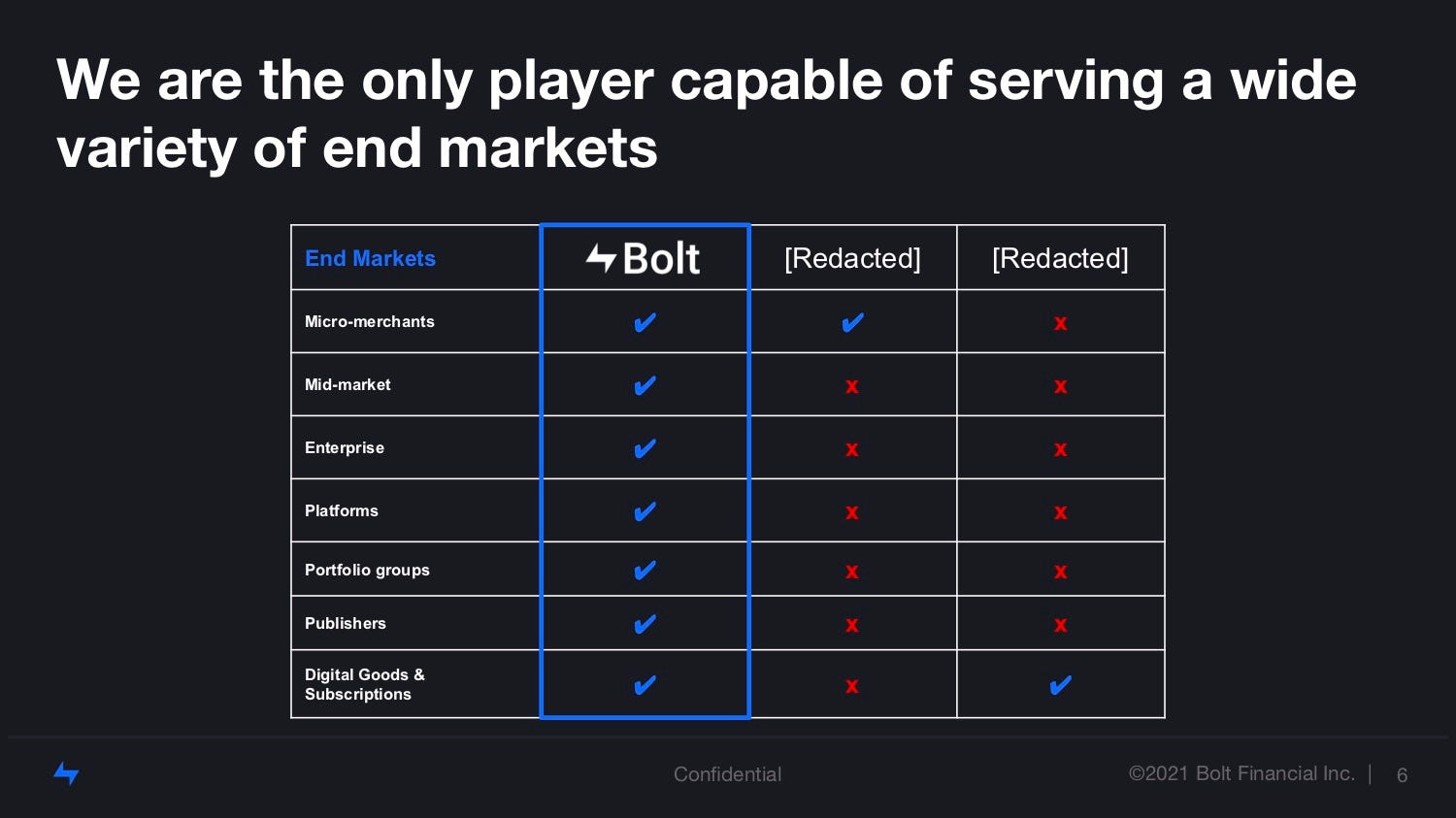
Another common alternative is to group your competitors and list their comparative disadvantages in a simple columnar layout (as seen below from our Hardware pitch deck template).
Regardless of the visualization you choose, the first step to securing funding for your startup is to convince investors you have a real edge over your competitors.
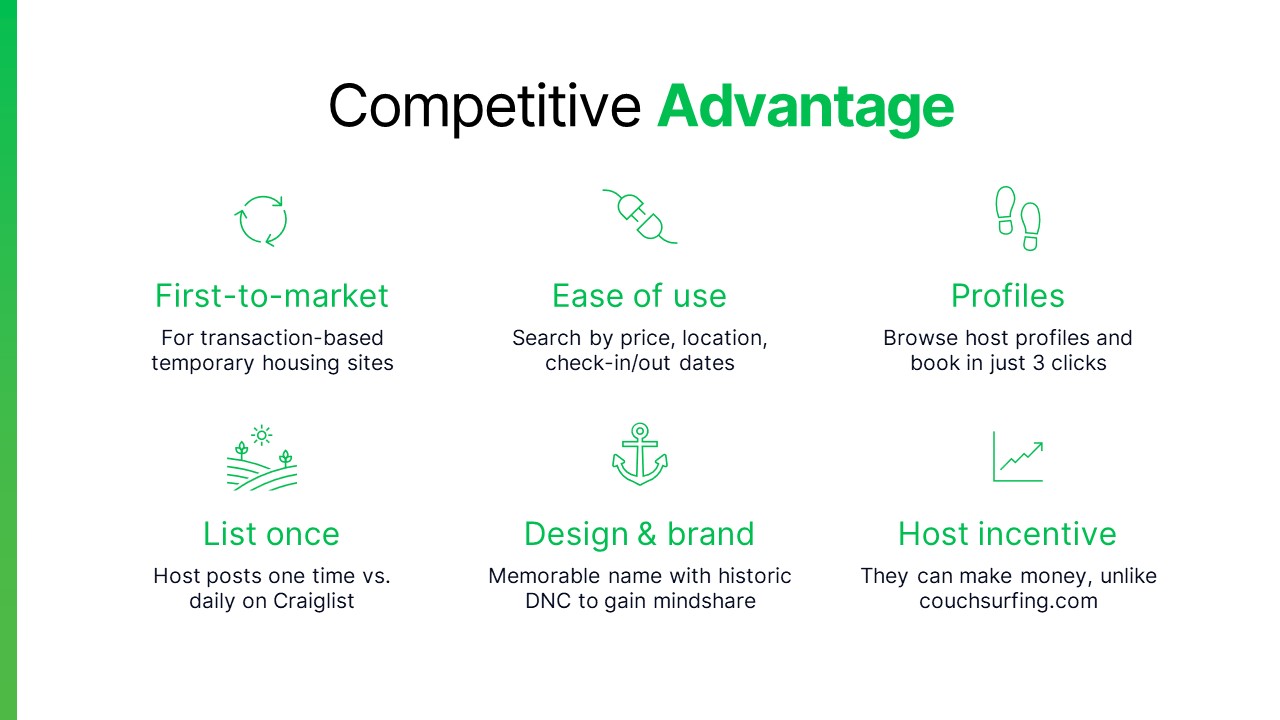
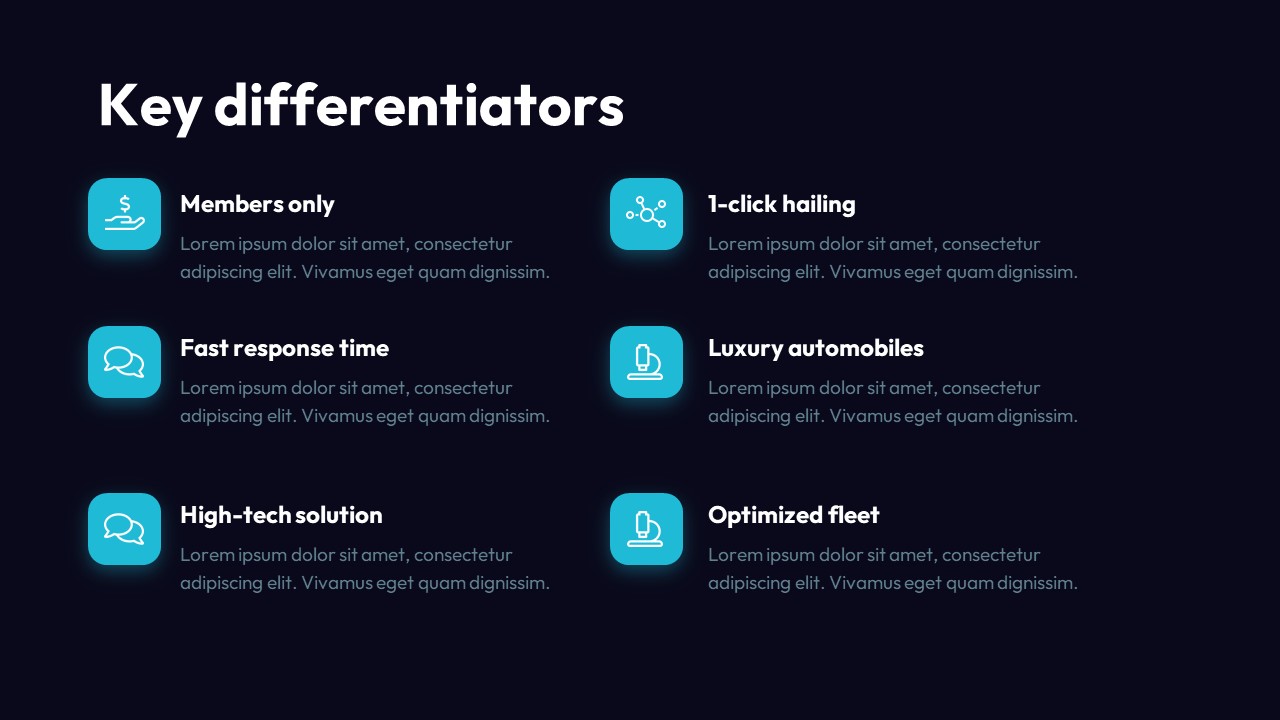

Follow along with this brief guide for what you should include in your pitch deck’s competition slide:
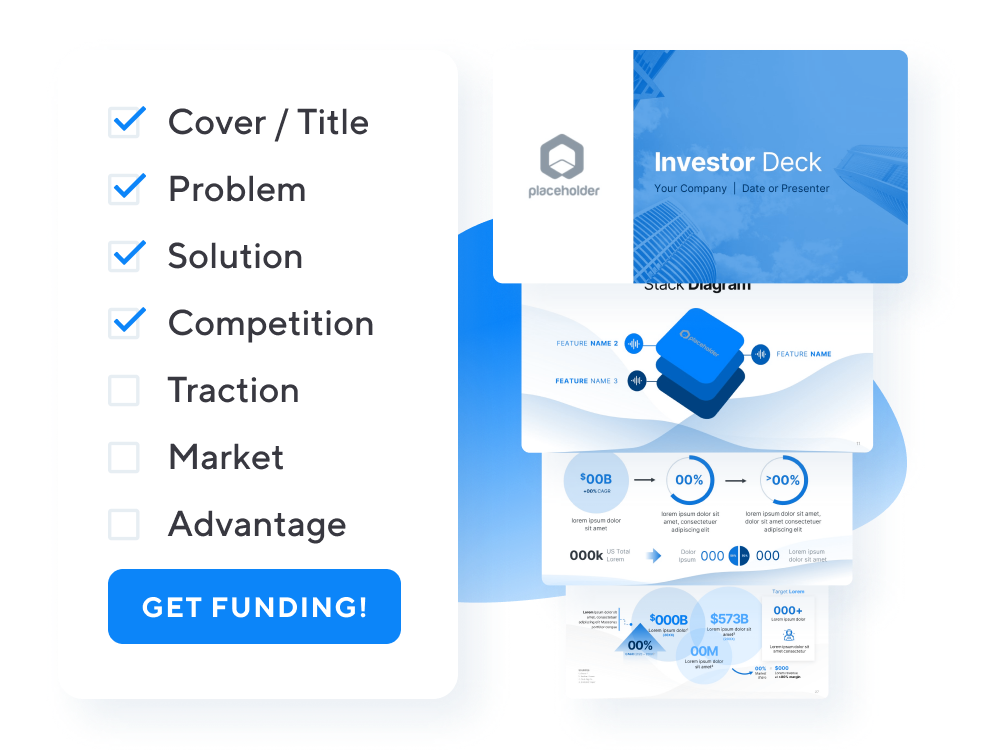


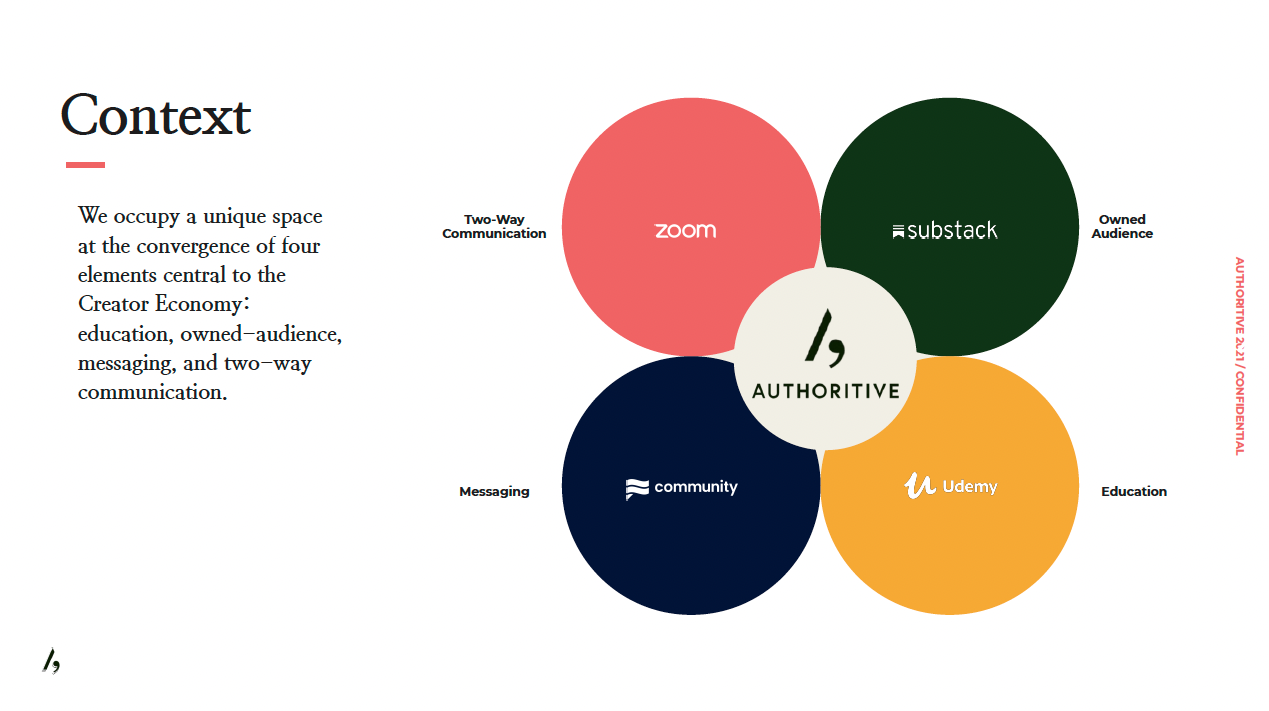
An effective competition slide should present all the information about your competition in an easy-to-understand visual format to convince investors why you have an edge. Whether you choose a tried-and-true visualization (such as the magic quadrant or petal diagram) or stick to a simple columnar layout or features table, the key is to make your advantage obvious & compelling.
At the same time, founders should avoid the urge to oversimplify: an over-optimistic competition slide can detract more than it adds to your pitch.
Below are some examples of winning competition slides from pitch decks for household names like Airbnb, Uber, and Sequoia Capital:

Build your investor presentation with the pitch deck template created by the experts behind Fortune 100 companies & Y-Combinator alums – trusted by hundreds of founders.